

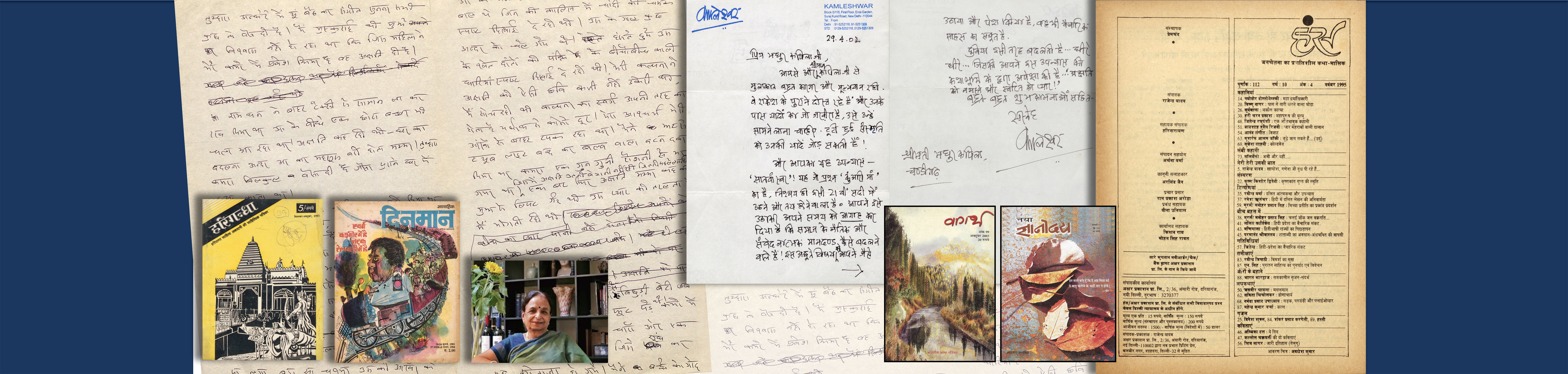
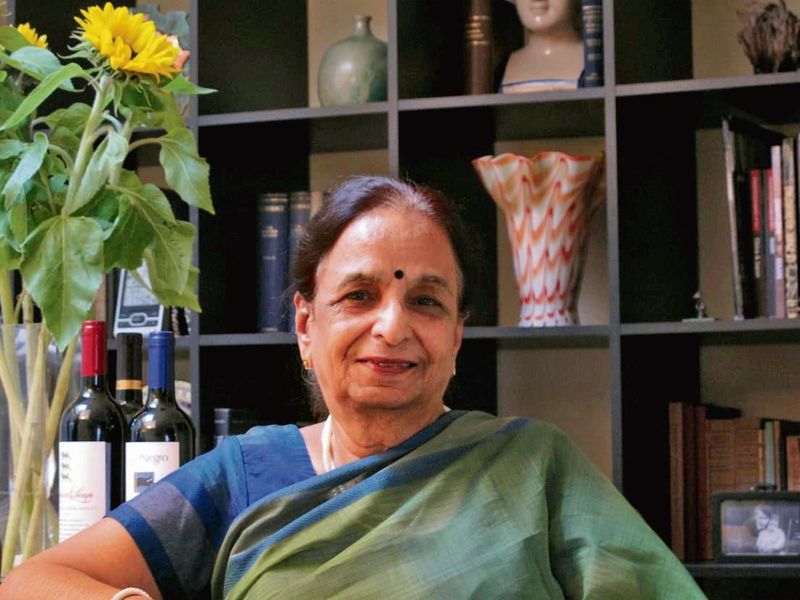
An accomplished novelist, journalist, and art critic, Madhur Kapila (1942–2021) grew up in Jalandhar, Punjab, in an environment steeped in classical music and the rich traditions of the Harballabh Sangeet Sammelan. At the young age of 12, she wrote her first novel, inspired by the profound upheaval of Partition. Her literary career formally began in 1960 when a short story of hers appeared in the local newspaper Veer Pratap.
Her debut novel, Bhatke Raahi (1964), told the story of a woman searching for her identity in the aftermath of Partition. Over the years, she contributed extensively to leading Hindi newspapers such as Dainik Tribune, Punjab Kesari, and Jansatta, while her short stories found space in renowned Hindi magazines including Hans, Vaagarth, Naya Gyanodaya, and Harigandha.
Kapila also had a deep commitment to the performing arts. She worked with the Chandigarh Sangeet Natak Akademi for over three decades, actively supporting and promoting theatre, music, and dance.
During the 1980s and 1990s, she continued to publish stories and essays that explored women’s experiences and pressing social issues. Her weekly column Kala Kshetraya in Dainik Tribune became widely read and served as a platform to serialise parts of her novel Satwan Swar. In 2010, she released another novel, Saamne ka Aasman, which wove together the lives of three theatre artists from different backgrounds, examining themes of class, culture, and identity. Her contributions to Hindi literature were recognised in 2011 with the Chandigarh Sahitya Akademi Award.
Kapila’s works became part of academic study, and collections like Beechon Beech, Tab Shayad, and Ek Muqadama Aur were especially acclaimed. In 2013, her stories were translated into English for the anthology Flowing Like a River, published in Indian Literature, the journal of the Sahitya Akademi.
She passed away on 19 December 2021. Her final novel, Nishesh, was published posthumously in 2024 by Penguin Random House. Through her sharp storytelling and insightful portrayal of women’s resilience and adaptation to change, Madhur Kapila left an indelible mark on Hindi literature—one that continues to inspire readers today.
About the Collection : The papers of Madhur Kapila have been donated by her son, Ashish Kapila, Chandigarh. The collection includes a file of correspondence with her contemporaries, masuscripts of novel Satwan Svar and back issues of Hindi magazines like Hans, Vaagarth, Naya Gyanodaya, Katha Kram, and others. The collection serves as an important resource for researchers and scholars of Hindi literature.
Donor : Ashish Kapila
Acquisition : 2025