

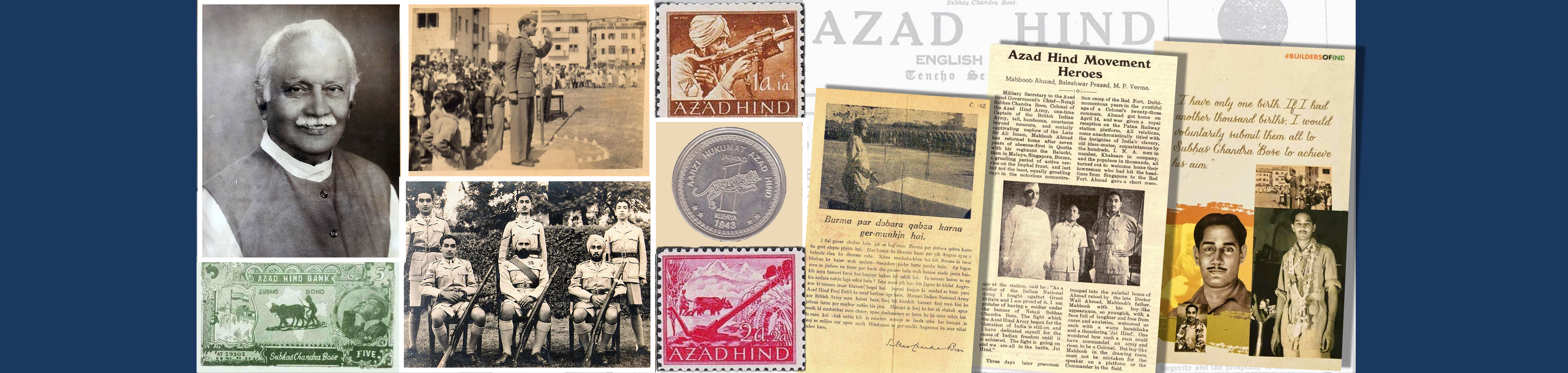
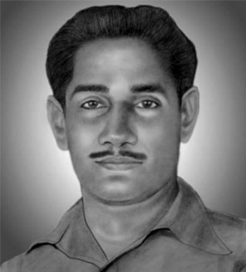
Colonel Mahboob Ahmad (19 March 1920 – 9 June 1992) was an eminent military officer, freedom fighter, and veteran diplomat who significantly shaped India's early post-independence global footprint. His foundational training began at the Prince of Wales Royal Indian Military College (RIMC) from 1932 to 1937, after which he underwent advanced training at the Indian Military Academy. Commissioned into the 6th Battalion of the 13th Frontier Force Rifles in 1940, his trajectory shifted dramatically when he was captured as a Prisoner of War during World War II. This pivotal event led him to volunteer for the elite Subhash Regiment of the Indian National Army (INA), where he engaged in intense combat operations across Burma and Northeast India. His exceptional leadership earned the trust of Netaji Subhash Chandra Bose, who appointed him as his Military Secretary. In this highly influential role, Colonel Ahmad served as the core operational liaison between the Provisional Government of Azad Hind and the Azad Hind Fauj. After his release from prison in 1946, he demonstrated a deep commitment to his comrades by establishing 'Wali Manzil' at his family residence in Patna, creating a specialized rehabilitation camp to support former INA soldiers transitioning back into civil society. Recognising his strategic acumen, Prime Minister Jawaharlal Nehru personally invited Colonel Ahmad to join the newly formed Indian Foreign Service (IFS) in 1949. His early diplomatic career included vital postings to Burma and Iraq, which were succeeded by his appointment in 1956 as the Special Officer in charge of the Goa Liberation Movement. Over the next two decades, his global leadership expanded across critical Cold War era and international diplomacy. He served as the Consul General in Berlin from 1958 to 1961, graduated from the National Defence College in 1963, and subsequent roles saw him serve as Deputy High Commissioner to Malaysia, Ambassador to Iraq, and Chief of Protocol in Delhi in 1971. From 1976 to 1979, he served as India's High Commissioner to Canada, After his retirement in 1979, he dedicated his vast administrative experience to public service, serving on the Eastern Region Reserve Bank Board, the Banking Recruitment Board, and as a trusted trustee of the historic Khuda Bakhsh Oriental Public Library in Patna alongside his wife, Zeanut Mahboob, whom he married in 1957.
About the Collection:
The collection of Colonel Mahboob Ahmad, donated by his wife Begam Zeanut Mahoob Ahmad, comprising 71 digitized images in JPG format. This unique repository contains rare visual documentation of frontline INA operations and camp life, an authentic bond notes from the Azad Hind Bank, personal wartime messages and dispatches from Netaji Subhash Chandra Bose, and official postal stamps and 11 related articles. This collection holds immense relevance for modern historical research, serving as an invaluable primary source for scholars studying India's independence movement.
Donor: Begum Zeanut Mahboob Ahmad
Acquisition: 2026